



There is something magical about watching a young child discover the world. A cardboard box becomes a castle, a wooden spoon transforms into a magic wand, and a handful of leaves collected during an afternoon walk becomes a masterpiece. To adults these moments may seem ordinary, but for children they are powerful learning experiences that shape how they think, create, and understand the world around them.
One of the greatest misconceptions about early childhood learning is that it requires expensive toys, complicated educational materials, or hours of structured lessons. In reality, some of the most meaningful learning happens through simple, everyday moments shared with a caring adult.
At Valemont Early Years, we believe creativity is not just about making beautiful artwork—it is about encouraging children to explore, solve problems, express themselves, and develop confidence in their own abilities. The following activities are easy to recreate at home and offer wonderful opportunities for families to learn, laugh, and grow together.
Turn Tiny Hands into Masterpieces
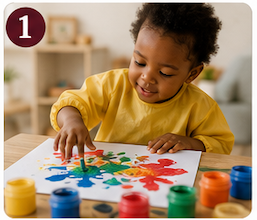
Finger painting remains one of the simplest yet most rewarding creative activities for young children. While parents may see a colourful mess, children are discovering
textures,experimenting with colours, and strengthening the small muscles in their hands that will one day help them hold a pencil and write.
The finished picture is never the true goal. The excitement of dipping little fingers into paint, mixing colours together, and proudly showing a completed creation is where the real learning takes place. Remember to use washable, non-toxic paints and let your child explore freely without worrying about staying inside the lines.
Discover Nature Together
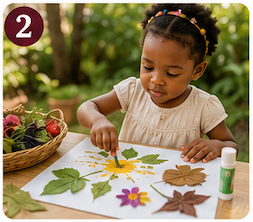
Some of the best art supplies cannot be bought in a shop—they can be found just outside your front door.
A walk around your neighbourhood or garden can become an exciting treasure hunt as your child collects leaves, flowers, pebbles, seed pods, or small twigs. Once home, these natural materials can be arranged and glued onto paper to create a beautiful collage.
More importantly, this activity encourages children to observe the world around them. They begin to notice colours, shapes, textures, and seasons while developing an appreciation for nature that can last a lifetime.
Make Music with Everyday Objects

Children have an incredible sense of rhythm, and they don't need a professional instrument to discover it.
An empty bottle filled with rice becomes a shaker. Pots and pans transform into drums. A tissue box with elastic bands stretched across it suddenly becomes a guitar. As children experiment with sounds and movement, they develop coordination, listening skills, and self-expression.
The laughter that usually accompanies these homemade concerts is an added bonus.
Let Imagination Lead the Way

Before recycling your next cardboard box, consider giving it one more adventure.
With a few crayons, some child-safe scissors, and a little imagination, a simple box can become a pirate ship, a rocket, a grocery shop, or a magical castle. Children naturally invent stories around these creations, practising communication, problem-solving, and creative thinking as they play.
Imaginative play is one of the foundations of healthy childhood development because it allows children to explore ideas, emotions, and relationships in a safe and enjoyable way.
Paint Without the Mess

Not every creative activity needs paint.
On a warm afternoon, give your child a small bucket of water and a paintbrush and encourage them to "paint" the patio, fence, or pavement. They will delight in watching their artwork appear and slowly disappear as the water evaporates.
This simple activity develops hand control and concentration while giving children complete creative freedom—and parents will appreciate the effortless clean-up.
Explore the Endless Possibilities of Play Dough

Few activities capture a child's attention quite like play dough.
Rolling, squeezing, stretching, pinching, and shaping soft dough provides hours of entertainment while quietly strengthening the muscles needed for writing, drawing, and dressing independently.
Children might create animals, flowers, letters, or simply enjoy the sensory experience of moulding the dough with their hands. There is no right or wrong way to play, and that freedom encourages creativity to flourish.
Turn Learning into a Colourful Game
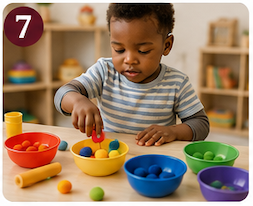
Everyday household objects can become valuable learning tools with very little preparation.
Gather coloured blocks, bottle caps, plastic cups, or even pieces of fruit and invite your child to sort them by colour. What begins as a simple game gradually introduces early mathematical thinking, pattern recognition, and organisational skills.
As your child grows, you can increase the challenge by asking them to sort by size, shape, or even texture.
Bring Stories to Life
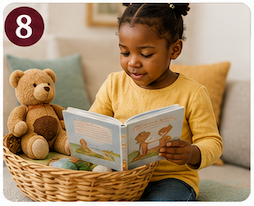
Reading becomes even more memorable when children can touch and explore what they hear.
Choose a favourite picture book and collect a few objects related to the story—a toy animal, a leaf, a small boat, or a piece of fabric. As you read together, encourage your child to hold each object and connect it to the story unfolding on the page.
This multi-sensory approach helps children stay engaged, strengthens vocabulary, and makes story time an experience they eagerly anticipate.
Invite Your Child into Everyday Life
Children often learn the most when they feel trusted with real responsibilities.
Simple tasks such as washing vegetables, stirring cake batter, pouring water into a cup, or arranging fruit on a plate allow children to contribute while developing independence and coordination. These practical experiences teach patience, concentration, and confidence far more effectively than many structured lessons.
With close supervision, everyday routines become valuable learning opportunities.
Create a Treasure Hunt
 A treasure hunt transforms an ordinary afternoon into an exciting adventure.
Hide a selection of safe household objects around the room and encourage your child to search for them using clues such as "Find something soft," "Find something blue," or "Can you find something that makes a sound?"
As they search, children practise listening, observation, memory, language development, and problem-solving without even realising they are learning.
Why Creative Play Matters
When parents hear the word "play," it is easy to imagine children simply having fun. Yet every moment of creative play is helping to build important foundations for future learning.
As children paint, build, imagine, sing, and explore, they are strengthening the connections within their growing brains. They learn to solve problems, communicate ideas, manage emotions, and develop the resilience needed to try again when something does not work the first time.
These experiences cannot be rushed or replaced by worksheets. They emerge naturally when children are given time, encouragement, and the freedom to explore.
The Greatest Gift You Can Give Your Child
Many parents worry they are not doing enough. They search for the latest educational toys or feel pressure to fill every moment with structured activities.
The truth is far simpler.
Children do not need perfect parents. They need present parents.
A few minutes spent reading together, building a cardboard castle, collecting leaves in the garden, or making music with kitchen utensils creates memories that will last far longer than any expensive toy ever could. It is through these ordinary moments that children feel loved, secure, and inspired to learn.
Learning Through Play at Valemont Early Years
At Valemont Early Years, learning through play is at the heart of everything we do. Every classroom has been thoughtfully designed to encourage creativity, curiosity, independence, and joyful discovery through Montessori-inspired experiences, sensory exploration, arts, music, storytelling, and outdoor learning.
Our mission is to nurture confident, compassionate, and curious children by providing a safe and enriching environment where every day is an opportunity to learn through play.