

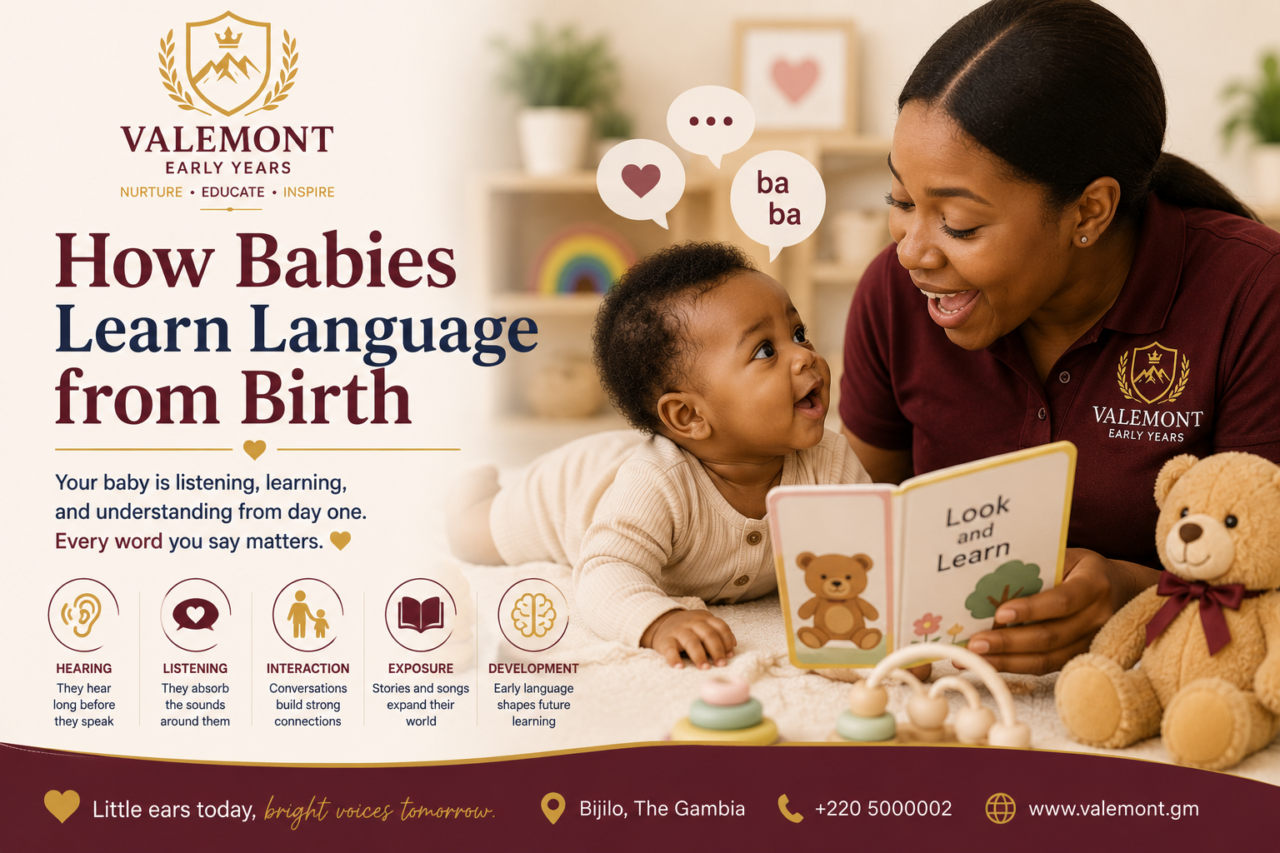
One of the most remarkable things about babies is that they begin learning language long before they ever say their first word.
From the moment they enter the world, babies are listening. They recognise familiar voices, notice changes in tone, respond to facial expressions, and slowly begin making sense of the sounds around them. Although their first words may not arrive until around their first birthday, their journey towards communication begins on day one.
Language development is not something that suddenly happens—it grows naturally through thousands of small, loving interactions every day. Every cuddle, smile, lullaby, bedtime story, and conversation helps build the foundation for future learning.
At Valemont Early Years, we believe that every conversation with a child is an opportunity to help them grow.
Language Begins Before Words
Many parents believe babies only begin learning language when they start talking. In reality, speaking is simply the final stage of a much longer process.
Before babies can use words, they spend months listening carefully to the people around them. They learn the rhythm of speech, recognise familiar voices, identify emotions through tone, and begin connecting sounds with people, objects, and experiences.
Even newborn babies can distinguish their mother's voice from others, demonstrating that learning begins far earlier than many people realise.
Every conversation you have—even if your baby cannot respond—helps strengthen the neural pathways responsible for communication.
Babies Learn Best Through Human Interaction
No educational toy, television programme, or mobile application can replace genuine human interaction.
Babies learn language by watching faces, listening to voices, observing expressions, and participating in real conversations. They carefully study how mouths move when words are spoken and gradually begin experimenting with sounds of their own.
This is why simple everyday moments are so powerful.
Talking while changing a nappy, describing what you're cooking, pointing to birds during a walk, or explaining what you're doing while folding laundry may seem ordinary, but these conversations are building your baby's vocabulary every single day.
Language grows naturally through relationships.
Every Conversation Builds Their Vocabulary
Children learn words through repetition and meaningful experiences.
When you consistently name everyday objects, your baby begins connecting sounds with meaning.
"Here's your bottle."
"Look at the dog."
"The ball is blue."
"Let's wash your hands."
Although they may not respond immediately, their brain is constantly collecting information and building a mental dictionary that will eventually become spoken language.
Research consistently shows that children who experience rich conversations from an early age often develop stronger communication skills, larger vocabularies, and greater confidence as they grow.
Reading Starts Long Before They Can Read
Many parents wait until preschool before introducing books, but babies benefit from reading from birth.
Picture books, nursery rhymes, and simple stories expose children to new words, different sentence structures, and expressive language they may not hear during everyday conversation.
Reading together is about much more than words on a page.
It creates moments of closeness, encourages eye contact, builds attention span, and helps babies associate books with comfort and enjoyment.
A few minutes of reading every day can have a lasting impact on your child's love of learning.
Singing Helps Language Flourish
Music plays an important role in early language development.
Songs naturally introduce rhythm, repetition, and predictable patterns that help babies recognise sounds and remember words more easily.
Simple nursery rhymes, action songs, and lullabies encourage listening, imitation, and eventually speech.
Even if you don't consider yourself a great singer, your baby will love hearing your voice.
To them, it is the most comforting sound in the world.
Respond to Their Attempts to Communicate
Long before babies use words, they communicate in many different ways.
They smile.
They point.
They babble.
They make eye contact.
They laugh.
These early attempts are the beginning of conversation.
When your baby babbles, respond as though they have spoken to you. Smile, answer them, and continue the "conversation." This back-and-forth interaction teaches one of the most important rules of communication—that conversations involve listening and taking turns.
These simple exchanges build confidence and encourage babies to continue experimenting with language.
Create a Language-Rich Environment
Children thrive when they are surrounded by language.
A language-rich environment doesn't require expensive resources or formal lessons. Instead, it is created through everyday interactions filled with warmth, curiosity, and conversation.
Describe what you see during a walk.
Talk about colours while getting dressed.
Count toys together.
Name different foods during meals.
Ask simple questions, even before your baby can answer.
The more opportunities children have to hear meaningful language, the stronger their communication skills become over time.
Every Child Develops at Their Own Pace
It is natural for parents to compare milestones, especially when speaking with family and friends.
However, language development varies from child to child. Some children begin talking earlier, while others spend more time listening before finding their voice.
What matters most is steady progress rather than comparing one child with another.
If you ever have concerns about your child's hearing, understanding, or communication development, speak with your healthcare provider or a qualified child development professional. Early support can make a significant difference when needed.
How We Support Language Development at Valemont
At Valemont Early Years, language is woven into every part of the day.
Our caregivers and educators engage children in meaningful conversations, read stories, sing songs, introduce new vocabulary through play, and encourage children to express themselves in a safe and nurturing environment.
Whether during sensory activities, outdoor exploration, mealtimes, or quiet reading sessions, every interaction is an opportunity to strengthen communication, curiosity, and confidence.
We believe that children learn best when they feel heard, valued, and loved.
Final Thoughts
Language is one of the greatest gifts we can give our children.
Long before they speak their first word, babies are listening, learning, and building the foundations for every conversation they will have throughout their lives.
Every story you read, every song you sing, every smile you share, and every word you speak becomes part of their journey.
Those small moments may seem ordinary today, but together they shape confident communicators, curious learners, and lifelong readers.
Because every conversation truly matters.
About Valemont Early Years
At Valemont Early Years, we create language-rich learning experiences that inspire curiosity, confidence, and a lifelong love of communication. Through meaningful conversations, storytelling, music, and play, we help children build the foundations they need to thrive in school and beyond.
If you would like to learn more about our programmes or arrange a personal tour, we would be delighted to welcome you.
📞 +220 5000002