


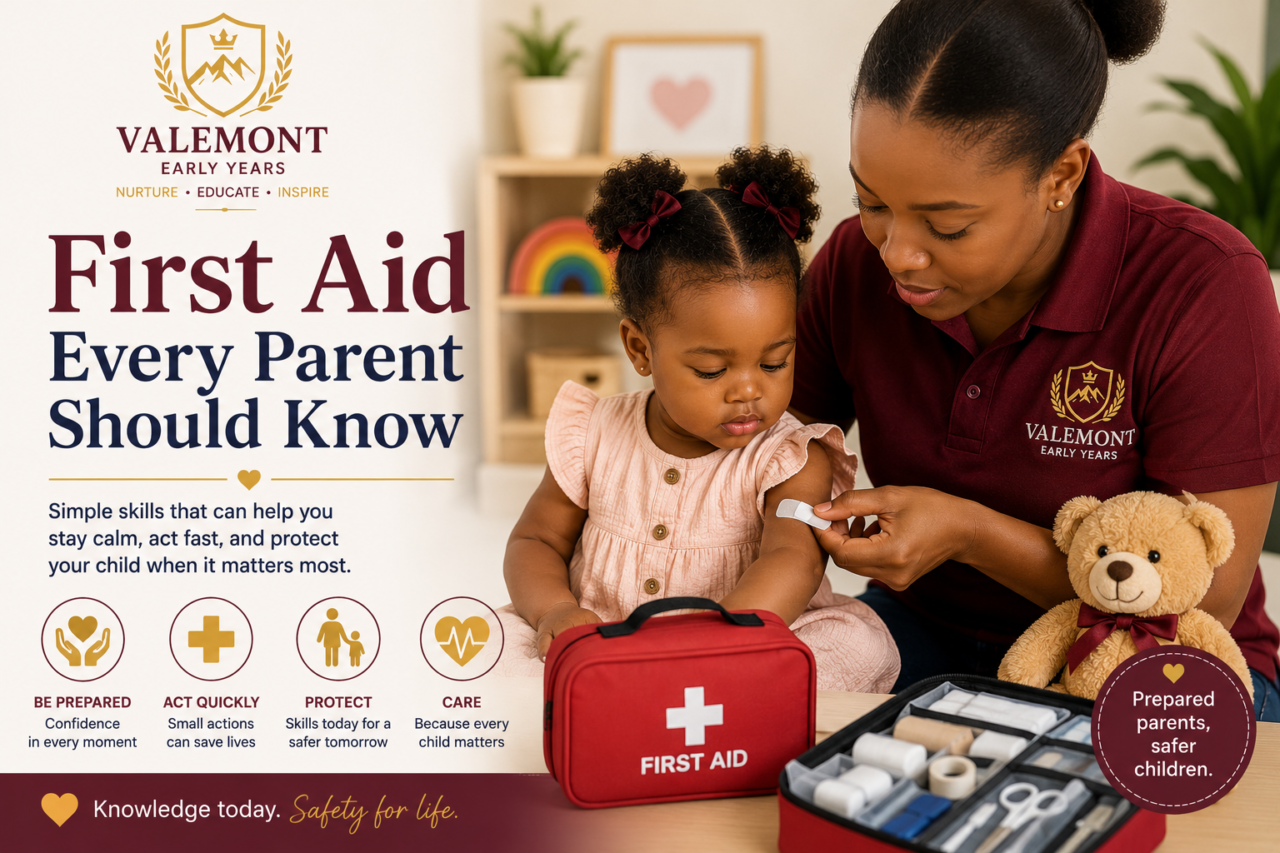
There are few moments more frightening for a parent than seeing their child hurt. Whether it's a tumble while taking their first steps, a choking incident during mealtime, or a curious hand reaching for a hot cup of tea, childhood is full of exploration—and with exploration comes the occasional accident.
While no parent can prevent every bump, scrape, or unexpected emergency, being prepared can make all the difference. First aid is not about replacing professional medical care; it's about knowing what to do in those important first few minutes before help arrives. Staying calm, responding appropriately, and understanding when to seek medical attention can help reduce complications and, in some situations, save a life.
At Valemont Early Years, we believe that every parent and caregiver should feel confident in responding to everyday emergencies. Here are some of the essential first aid principles every family should know.
Staying Calm Is Your First Response
When an accident happens, your child will often look to you before anyone else. Your reaction sets the tone. Remaining calm allows you to think clearly, assess the situation, and reassure your child that they are safe.
Take a moment to ensure there is no ongoing danger, such as traffic, electricity, or a hot surface. Once the environment is safe, check your child's condition. Are they awake? Are they breathing comfortably? Are they responding normally?
Even if you feel anxious inside, speaking gently and confidently can help reduce your child's fear while allowing you to make better decisions.
Knowing How to Respond to Choking
Young children naturally explore the world with their mouths, making choking one of the most common emergencies during infancy and the toddler years. Foods such as grapes, popcorn, nuts, and hard sweets, as well as small household objects, can quickly become hazards.
A child who is coughing forcefully is often still able to clear the blockage themselves. However, if they cannot cry, speak, or breathe, or if their lips begin turning blue, immediate action is required.
One of the most important things to remember is never to blindly sweep inside a child's mouth with your fingers, as this may push the object even deeper. Every parent should consider learning infant and child choking first aid from a certified instructor, as proper techniques differ depending on the child's age.
Caring for Cuts and Scrapes
Minor cuts and grazes are almost a rite of passage during childhood. Whether from playground adventures or enthusiastic exploration at home, most can be treated safely with simple care.
Cleaning the wound thoroughly under clean running water removes dirt and reduces the risk of infection. Applying gentle pressure usually stops minor bleeding, after which a clean dressing can help protect the area while it heals.
However, deep wounds, heavy bleeding that does not stop after several minutes of pressure, or injuries caused by dirty or rusty objects should always be assessed by a healthcare professional.
Treating Burns Correctly
Burns are among the most common household injuries affecting young children, often caused by hot drinks, cooking pots, irons, steam, or bath water that is too hot.
The first few minutes after a burn are critical. Cooling the affected area under cool running water for at least twenty minutes helps limit damage to the skin and underlying tissues.
Unfortunately, many traditional remedies—such as butter, toothpaste, cooking oil, or ice—can actually make burns worse and should never be applied. If the burn is large, deep, or involves sensitive areas such as the face, hands, feet, or genitals, urgent medical attention should be sought immediately.
Understanding When a Fever Is Serious
A fever can be alarming, particularly for first-time parents, but it is often simply a sign that the body is fighting an infection.
Most children recover well with rest, fluids, and appropriate medical advice. However, certain situations require immediate assessment by a healthcare professional. Babies under three months of age with a fever should always be examined promptly. Likewise, if a child becomes unusually sleepy, has difficulty breathing, experiences a seizure, or is difficult to wake, emergency medical care should be sought without delay.
Learning to recognise these warning signs helps parents respond with confidence rather than panic.
Head Injuries Deserve Careful Observation
Children fall frequently as they learn to crawl, walk, climb, and explore. Thankfully, most bumps to the head are minor and heal without complications.
Even so, it is important to observe your child carefully after any significant fall. Persistent vomiting, unusual drowsiness, confusion, seizures, loss of consciousness, or changes in behaviour should never be ignored.
If something doesn't feel right, trust your instincts and seek medical attention. Parents know their children better than anyone else.
Protecting Children from Poisoning
Many everyday household products—including medicines, cleaning chemicals, cosmetics, and even certain plants—can be dangerous if swallowed.
The safest approach is prevention. Store medicines and chemicals in locked cupboards well out of children's reach, and always keep products in their original containers.
If you suspect poisoning, remain calm and contact emergency medical services immediately. Avoid trying to make your child vomit unless specifically instructed to do so by a qualified medical professional, as this can sometimes cause additional harm.
Every Parent Should Learn CPR
Perhaps no skill provides greater peace of mind than knowing how to perform cardiopulmonary resuscitation (CPR).
Although every parent hopes never to face such an emergency, CPR training equips you with the knowledge and confidence to act during those crucial moments before medical professionals arrive. It is one of the few skills that has the potential to save a life.
For this reason, we encourage every parent, grandparent, nanny, and caregiver to complete an accredited First Aid and CPR course whenever possible.
Creating a Safer Environment Starts with Preparation
At Valemont Early Years, we believe that children's safety should never be left to chance. That is why every member of our care team receives certified First Aid and CPR training through the Gambia Red Cross Society before caring for children.
While we hope these skills are never required, preparedness is one of the greatest expressions of care. It allows our team to respond quickly, calmly, and professionally should an emergency ever arise, giving families greater confidence and peace of mind.
Final Thoughts
No parent can anticipate every accident, and no child grows up without the occasional bump or scrape. What truly matters is being prepared.
Learning basic first aid is not about expecting the worst; it is about being ready to protect the people who matter most. A few simple skills, combined with calm decision-making, can transform a frightening moment into one that is managed safely and confidently.
As children continue to explore the world around them, they deserve adults who are just as prepared to protect them.
About Valemont Early Years
At Valemont Early Years, we believe exceptional childcare extends far beyond education. Our commitment to safety, nurturing care, and highly trained professionals ensures that every child is supported in an environment where they can learn, play, and thrive with confidence.
If you would like to learn more about our programmes or arrange a personal tour, we would be delighted to welcome you.
📞 +220 5000002
🌐 www.valemont.gm