


"Choosing the best daycare in The Gambia is one of the most important decisions a parent will make. Every family wants a childcare centre where their child is safe, happy and encouraged to learn."
As parents, we all want the same thing: to know our children are safe, happy and cared for when they are away from us.
Whether you're returning to work, preparing your child for preschool, or simply looking for a nurturing environment where they can grow and thrive, selecting the right daycare is one of the most important decisions you'll ever make.
A beautifully decorated classroom is wonderful, but it doesn't tell the whole story. The real quality of a childcare centre lies in its people, its values and the systems that keep children safe, healthy and engaged every single day.
Whether you're looking for a daycare in The Gambia, a preschool in The Gambia or a trusted nursery school in The Gambia, asking the right questions can help you make a confident decision.
Before making your decision, here are ten questions every parent should ask.
1. Is the Centre Truly Safe?
Safety is far more than locked doors and security cameras.
When you visit a childcare centre, take a moment to observe how children move around the environment. Are entrances monitored? Are visitors required to check in? Are classrooms organised and free from unnecessary hazards?
A quality childcare centre should have clear child protection procedures, emergency response plans and staff who understand that safety is everyone's responsibility.
Peace of mind begins with knowing your child is protected.
2. Are the Caregivers Properly Trained?
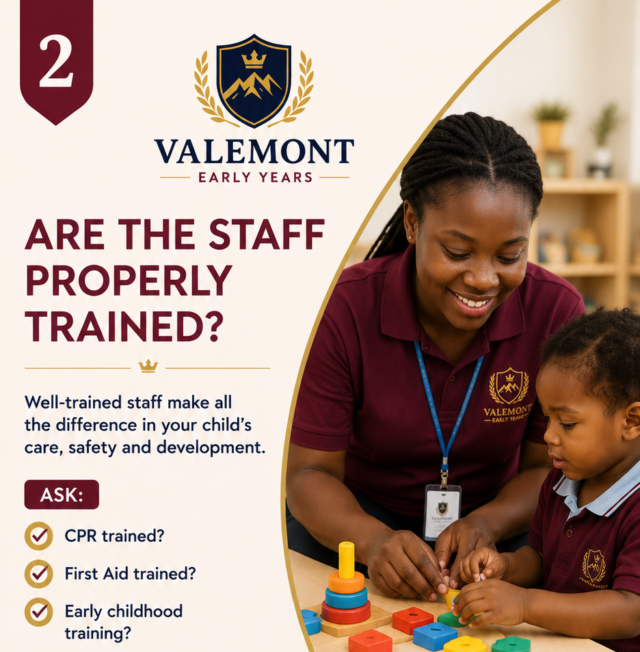
Children deserve more than supervision—they deserve knowledgeable careg
ivers who understand child development.
Ask about the team's qualifications. Are they trained in CPR and First Aid? Do they receive ongoing professional development? Do they understand how young children learn, communicate and express emotions?
Training gives caregivers the confidence to respond calmly during emergencies while also creating meaningful learning experiences throughout the day.
Great childcare starts with great people.
3. Is There Medical Support Available?
Every parent knows that children can become unwell without warning.
Whether it's a minor fall, a fever or an allergic reaction, knowing there is a qualified professional who can respond quickly provides enormous reassurance.
Ask how illnesses are handled, how parents are contacted and what procedures are followed if medical attention becomes necessary.
A centre that prepares for emergencies demonstrates that it takes every child's wellbeing seriously.
4. What Kind of Food Do Children Eat?
Healthy minds need healthy bodies.
Nutrition plays a vital role in brain development, concentration and physical growth during the early years.
Ask whether meals are freshly prepared, how food hygiene is maintained and whether children are offered balanced meals that include fruits, vegetables, proteins and whole grains.
Good eating habits developed during childhood often last a lifetime.
5. How Clean Is the Environment?
Young children explore the world with curious hands, which makes cleanliness especially important.
Look beyond appearances. Notice whether toys are regularly sanitised, whether handwashing is encouraged and whether bathrooms and play areas are clean and well maintained.
A clean environment not only reduces the spread of illness but also reflects a centre's commitment to professionalism and care.
6. How Are Parents Kept Informed?
Choosing a daycare shouldn't mean wondering how your child is doing throughout the day.
Strong childcare centres view parents as partners.
Daily updates about meals, naps, activities, milestones and memorable moments help families remain connected even while they're apart.
Open communication builds trust—and trust is the foundation of every successful childcare relationship.
7. Are Activities Designed for Your Child's Age?
Children don't all learn in the same way—or at the same pace.
A quality early years programme provides activities that match each child's developmental stage while encouraging curiosity, creativity and confidence.
Storytelling, music, outdoor exploration, sensory play and creative arts all help children develop language, coordination, problem-solving skills and social confidence.
Learning during the early years should always feel like joyful discovery.
8. Why Does the Child-to-Caregiver Ratio Matter?
One of the most important indicators of quality childcare is something many parents never think to ask about—the number of children each caregiver is responsible for.
Smaller groups allow caregivers to spend more individual time with each child, notice developmental milestones more quickly and respond faster whenever a child needs comfort or assistance.
Children in smaller groups often feel more secure because they build stronger relationships with familiar caregivers.
They are also more likely to receive personalised encouragement, participate confidently in activities and develop socially at their own pace.
Quality childcare isn't about how many children a centre can accommodate—it's about how well every individual child is cared for.
9. Is the Centre Prepared for Emergencies?
Emergencies are rare, but preparation should never be.
Ask how the centre responds to medical situations, fire alarms or evacuations. Find out whether drills are practised regularly and how parents are notified if something unexpected happens.
Preparedness reflects professionalism.
When procedures are well planned and staff are properly trained, parents gain confidence knowing their children are in capable hands.
10. Finally... Trust Your Instincts
Sometimes the most important answer doesn't come from asking questions—it comes from observing.
As you walk through the centre, pay attention to how it makes you feel.
Are the children smiling?
Do caregivers speak kindly and patiently?
Does the environment feel calm, organised and welcoming?
Can you picture your child feeling safe and happy there?
Your instincts matter.
If something doesn't feel right, keep looking.
If everything feels right, you've probably found somewhere special.
Every Child Deserves the Best Possible Start
Choosing a daycare is about much more than finding childcare—it's about finding a place where your child will be loved, encouraged and inspired to grow.
At Valemont Early Years, we believe every child deserves individual attention, meaningful learning experiences and a safe environment where they can develop with confidence.
If you're looking for a safe daycare in The Gambia, or exploring options for early childhood education in The Gambia, we invite you to visit Valemont Early Years and experience our learning environment for yourself.
📍 Bijilo, The Gambia
📲 WhatsApp: +220 5000002
🌐 www.valemont.gm
Frequently Asked Questions
What is the best age to start daycare?
Many children begin daycare between 6 months and 2 years, depending on their family's needs and the child's readiness.
What should I look for in a daycare in The Gambia?
Look for trained caregivers, strong safety procedures, a clean environment, age-appropriate learning activities, nutritious meals, and open communication with parents.
How important is the child-to-caregiver ratio?
A lower child-to-caregiver ratio allows for more individual attention, closer supervision, and stronger relationships between caregivers and children.